
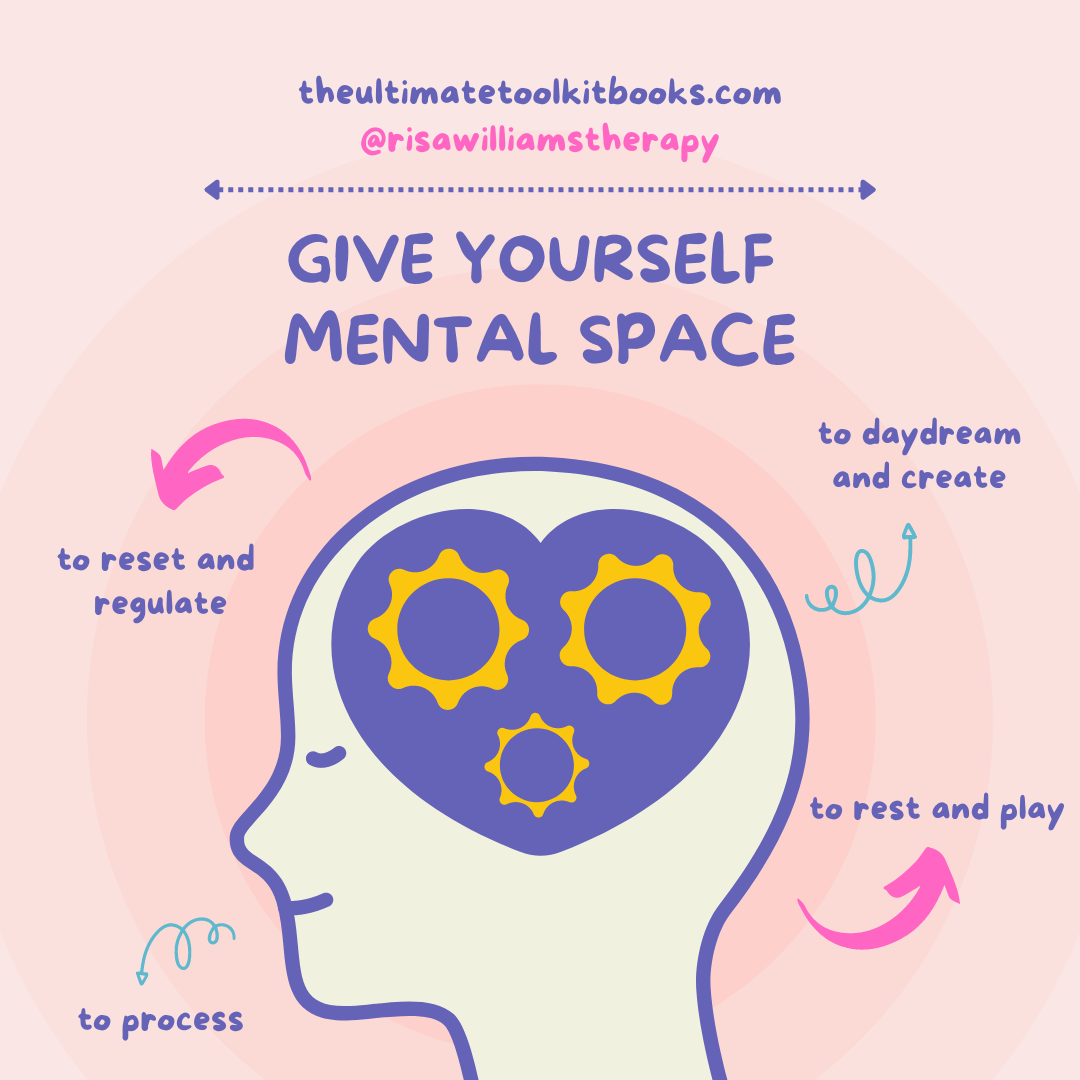
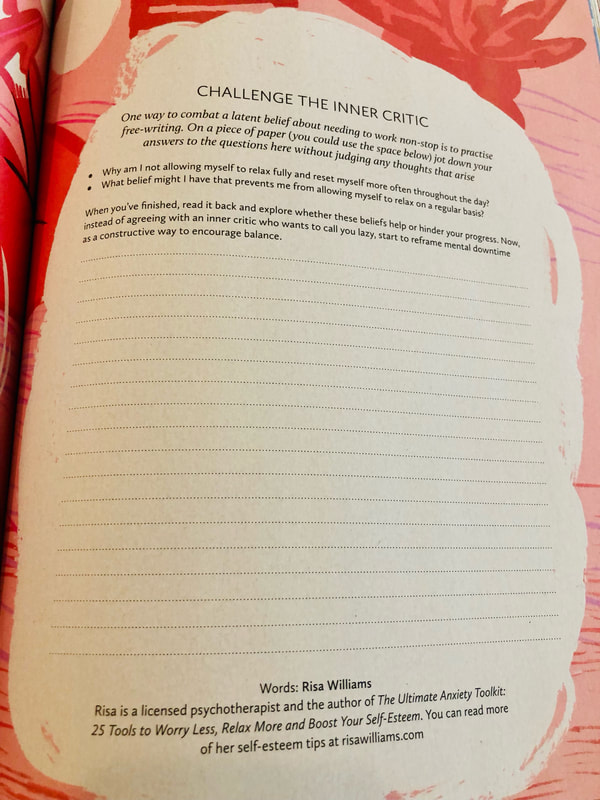
 Give yourself more than enough mental space: -To reset yourself -To regulate your stressful emotions -To process information -To daydream -To get creative -To rest -To play Our brains do not function well in a pressure cooker of stress and constant work/productivity. We need all these things to stay balanced, for the sake of our own mental health and emotional wellbeing. In "The Ultimate Time Management Toolkit," I discuss ways to create enough space for yourself to do all theses things each week in your schedule. Starting with today - what space can you give yourself simply to process things and reset yourself? Can you create space for mental downtime today? You can do things like... -Take more frequent scheduled breaks -Go outside for short walks -Sit somewhere near trees, flowers, plants or nature -Change locations to change your perspectives on things -Journal -Doodle/Sketch -Meditate -Let your body rest for a half hour to recharge -Get away from digital devices for a half hour, do something on paper instead Build in that time into your day...your brain will thank you with clarity and focus later! theultimatetoolkitbooks.com 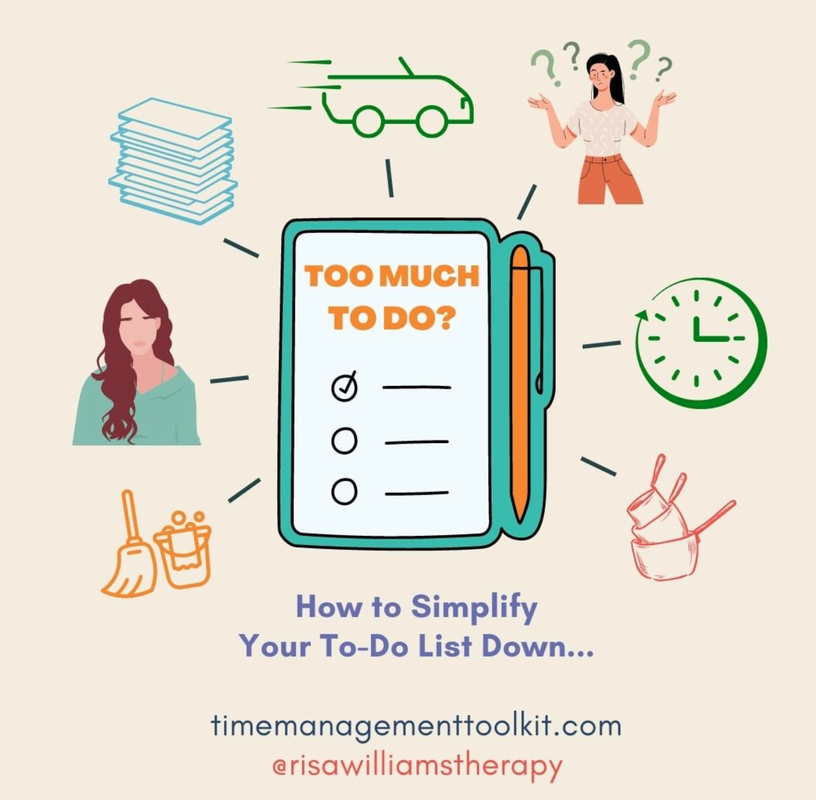 by Risa Williams, LMFT
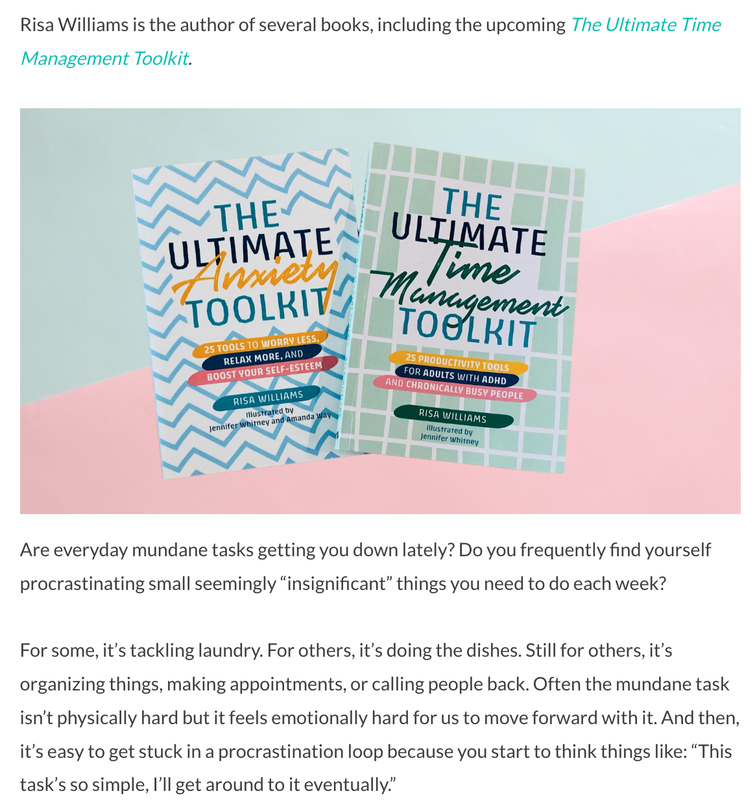
Do you frequently find yourself stressed out about everything you need to do? In my newest book, The Ultimate Time Management Toolkit, I provide some tools for simplifying your weekly to-do list down. Two common to-do list problems: 1) You keep your to-do list inside your head, and it keeps growing and growing. It's really overwhelming to have this much info floating around mentally and it can be hard to prioritize tasks that aren't listed out in front of you. 2) You write down your to-do list but it's way, way too long. Looking at your to-do list makes you feel stressed out and you want to procrastinate doing any of it. Simple ways to fix these your to-do list: 1) Keep one simple 3-5 item to-do list each week. This is for tasks that need to happen in this specific time frame. I recommend keeping it on a "Weekly Post-It" that you place by your computer. 2) Put all other tasks on a running list of things you need to do that don't need to happen this week. Schedule a time at the end of the week to tackle one of these "Odds & Ends" tasks and don't add any more until you complete one. Getting in the habit of starting your week off by writing these two lists can help keep you on track with finishing tasks you need to do. It can also help reduce your overwhelm and stress each week. Don’t overwhelm your brain by trying to keep it all in your head all the time! What to-do list tricks work best for you? |
Risa WilliamsTherapist & Coach. Writer & Professor. Brain Trainer. Archives
August 2022
Categories |


 RSS Feed